Submarine aircraft carrier deployed in Antarctica waters
It’s the year 2048: the world’s population has reached over 10 billion, natural resources are getting exhausted and space to live for people is shrinking fast due to global warming. Many nations start to look at the only place on Earth that hasn’t been colonized by mankind yet: Antarctica. It is thought the icy continent has abundant supplies of oil, gas, coal and iron ore.
Several nations are rushing to establish a presence in Antarctica before the Antarctic Treaty is reviewed in 2048. Though Antarctica is currently very dry and is still uninhabitable due to its extreme climate, the long term effects of global warming will make parts of Antarctica soon accessible for mining and in a century from now, also suitable for colonization.
But complicating issues around Antarctic sovereignty is the fact that while seven nations, including Australia and the UK, have long-standing territorial claims to Antarctic territory, those claims aren’t recognised under international law, making new international agreements necessary.
In order to secure their interests, several nations led by China, join forces under the code name ‘Project Bandung 55’ (refering to the Bandung Conference of 1955) to ensure a seat at the bargaining table. One of the surprising results of Project Bandung is a commonly developed and built submarine aircraft carrier.
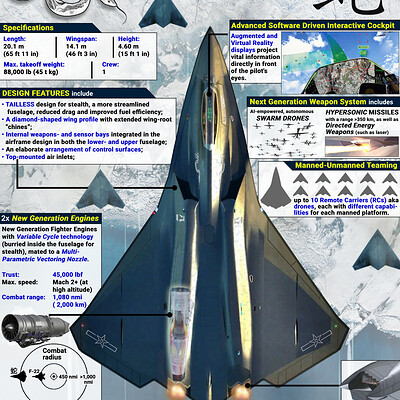
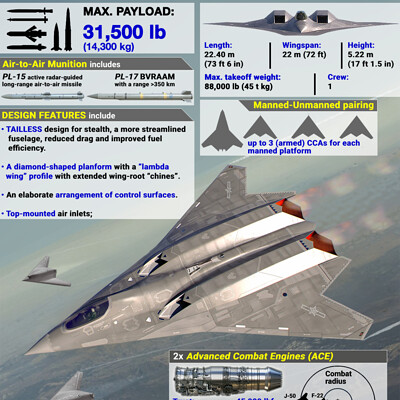
Shown here is the Great Wall (萬里長城), an astonishing 332m long submarine inspired by the Soviet Navy’s Akula (NATO-name: Typhoon)class, that is designed to operate military aircraft in the Arctic and the waters of Antarctica. It’s air wing operates China's latest 5th generation STOVL-combat aircraft, as well as a number of UAVs/UCAVs and unmanned helicopters. The Great Wall is also fitted with high-energy laser weapons and the latest SAMs, ASMs and hypersonic cruise missiles.
The Great Wall will primarily serve as a floating stronghold to back up claims of the Bandung 55-nations in Antarctica. US officials are completely taken by surprise and react furiously, but Beijing says China will continue to strengthen its position in Antarctica in support of their legitimate claims.