Future Hospital Ship
This post is a case study for an emergency support ship:
.
.
Emergency situations can include random non-predictable natural disasters, such as earthquakes, volcanic activity or landslides and flooding, seasonal events like extreme weather (tornados, tsunamis, etc.), wildfires and extreme temperatures and longer-term drought situations. Other human-initiated events, such as wars, warfare and terrorist attacks are also part of these emergency situations. Also, hunger situations and regional, insufficient health support systems are still being experienced in many regions around the globe.
.
.
The number of natural disasters is rapidly growing, reaching over 800 serious incidents in 2018, four times as many as there were in the 1980s. And the 2020 global spread of the COVID-19 virus and the several extreme, devastating natural phenomena that occurred in the last few years as a result of climate change, are supporting the case to have permanent emergency- and medical support- and disaster relief- capabilities available around the world that can be deployed quickly.
.
.
With 70% of the Earth’ surface covered by water, one way to handle these types of crises is by developing a fleet of emergency support vessels to cover some of the most critical emergency situations faced in today’s world. Existing vessels and newbuilds can be integrated into this fleet.
.
.
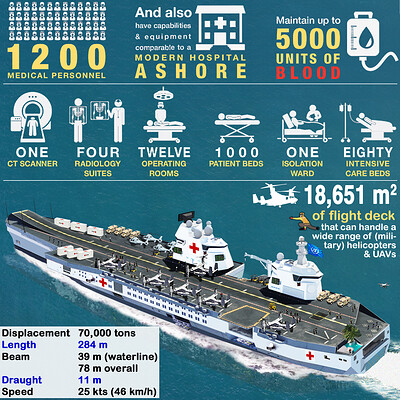
This post features a concept for a (military) hospital ship with aid capability. The term ‘hospital ship’ covers a range of functionality and services that are needed in such emergency situations, with its primary function being medical aid to distressed and people hurt.
.
.
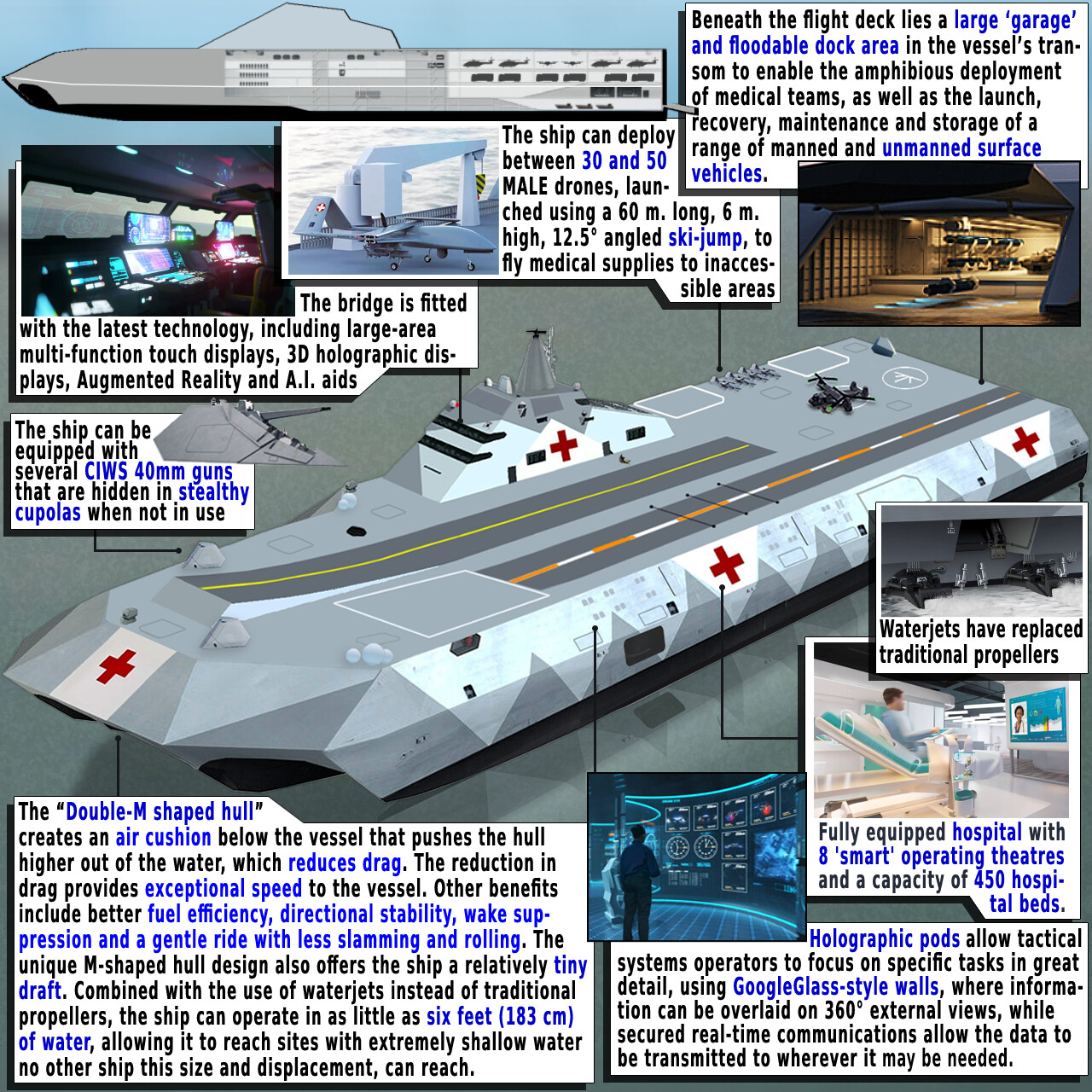
This design is a refinement of my sci-fi 2025 multihull concept ‘Nusantara’ for the Indonesian Navy that was featured in my previous post. Unlike the concept in my previous post, I’ve tried to make this concept as much a realistic near-future option as possible. It has several innovative features that already exist, or are currently being developed for future vessels. The selected “double M-hull” design is an ideal option for this concept, as this hull shape offers great stability, sustained high speeds, improved overall buoyancy and payload capacity and above all, the double M-shaped hull in combination with the use of waterjets instead of conventional ship propellers, enables extremely shallow water operations, thus enable the ship to provide emergency medical care and disaster relief in locations (including far-flung areas) that conventional large ships cannot reach because of their size and draft.