Future submarine aircraft carrier
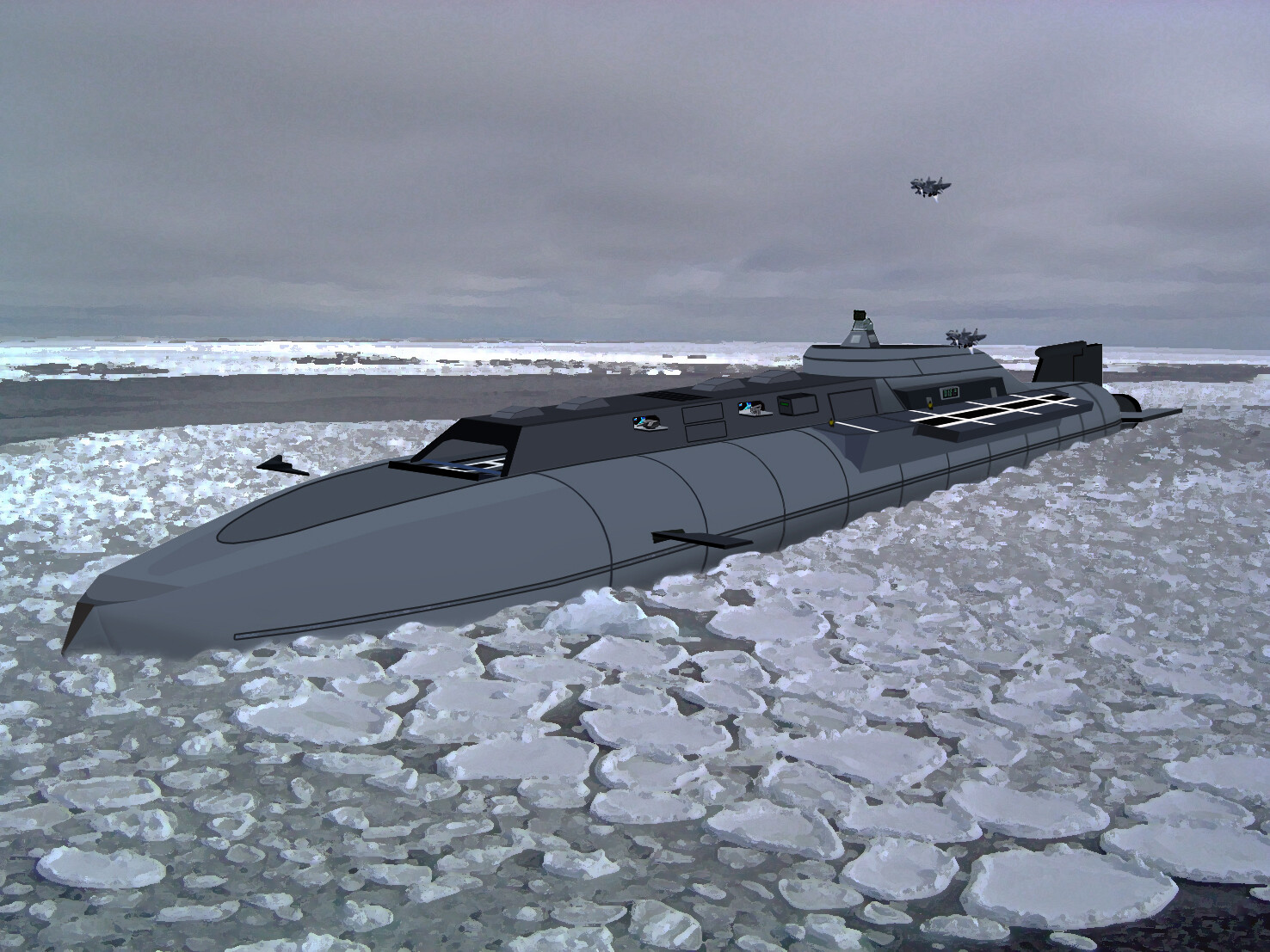
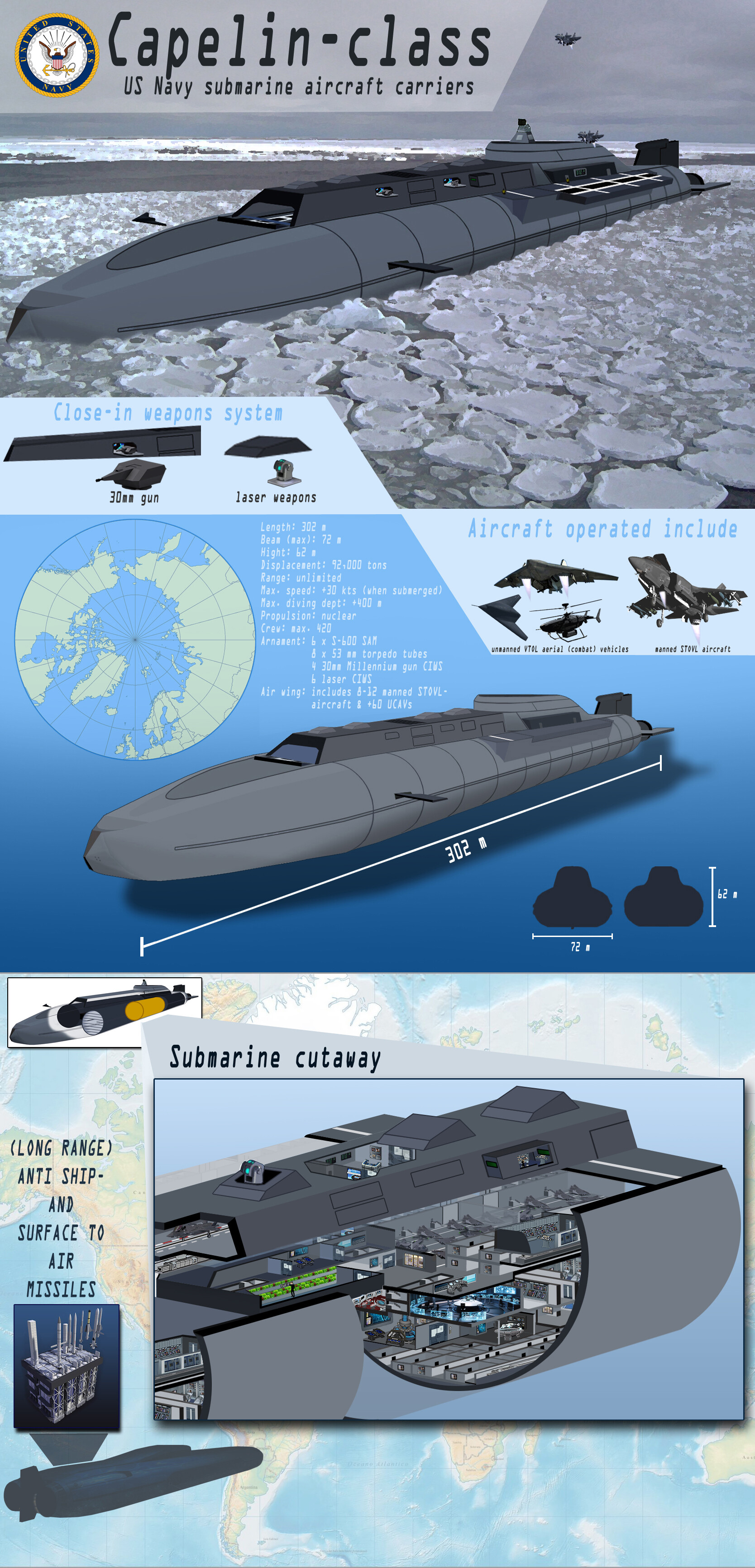
2035 - Submarine aircraft carrier on patrol in the Arctic
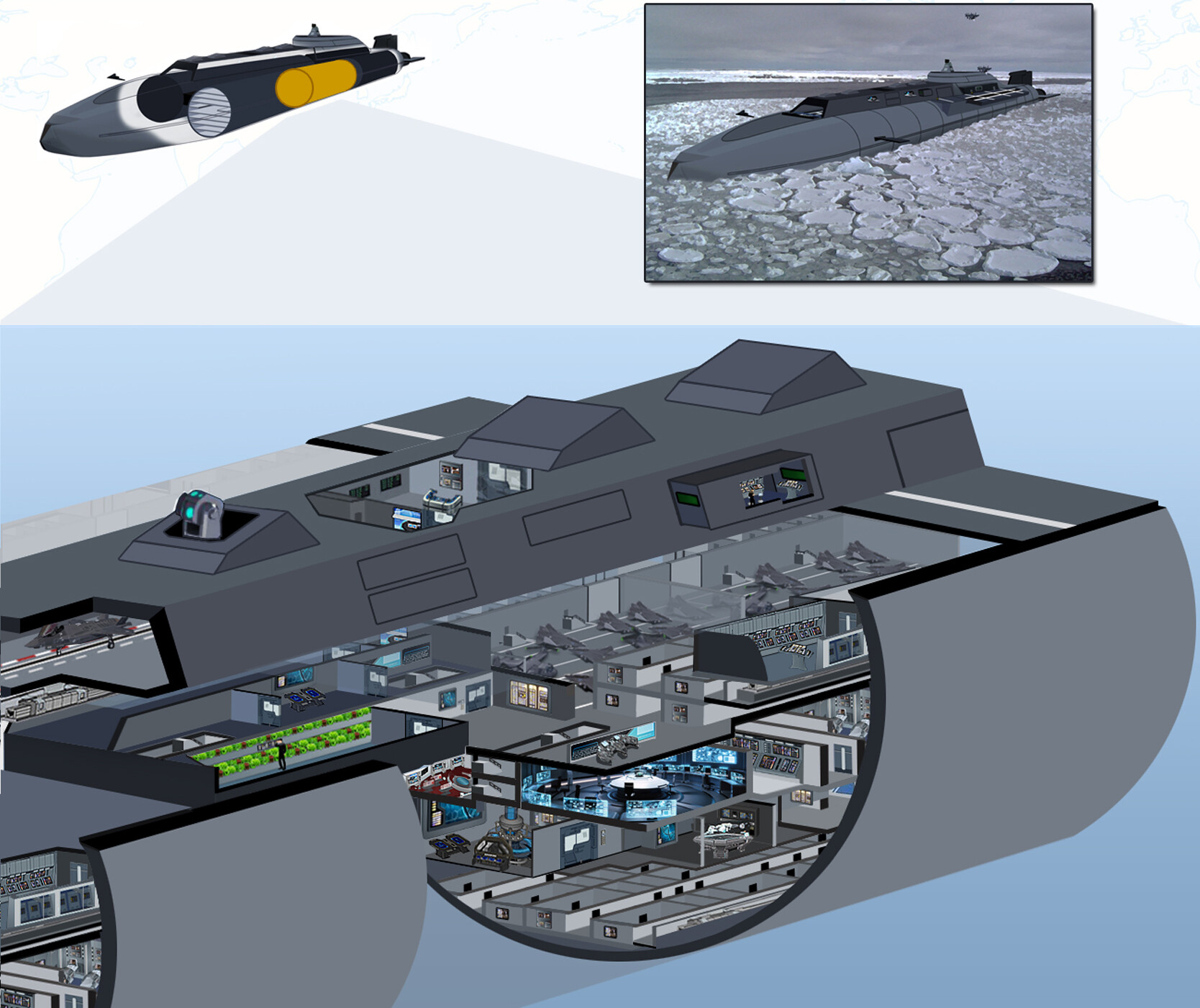
Cutaway of a Submarine Aircraft Carrier
Scientists predict that by 2036, the Arctic Ocean will be nearly completely ice free in the summer due to global warming and that by 2050, the Arctic Ocean will be nearly completely ice free throughout the whole year, offering new shipping routes, rich fishing areas and access to oil- and gas fields, currently inaccessible.
Russia is already the dominant power in the Arctic. It possess the largest fleet of (ice breaking) ships that can navigate the seas under the worst weather conditions and has dozens of military bases in the Arctic (the US only has 1 airbase in the Arctic, in the north of Greenland). In the last few years, Russia has also build up a significant military force in the north, deploying thousands of troops, submarines and combat jets in the Arctic. Russia considers the Arctic of major strategic importance to its future. In addition to that, Chinese investors have spent billions in Russian oil- and gas projects in the Arctic and China is also expanding its own capabilities for operating in the Arctic in the future. Yet in the West, only Norway has taken serious steps to secure her interests in a future ice free Arctic Ocean.
It’s only recently that Russian and Chinese attention for the Arctic has alerted the US, which prompted US President Donald Trump to make an unusual "offer" to Denmark to take over Greenland in an attempt to outflank the Russians in that part of the Arctic. Unfortunately for the Americans, Denmark kindly rejected the US offer.
So in order to counter the rapid Russian and Chinese expansion in the Arctic, Congress approved the development and construction of the world's first submarine aircraft carrier in the world, the USS Capelin-class, to first two to be fully operational by 2038. Their design is inspired on the former Soviet Union's Typhoon-class of SSBN's. But these submarines will be almost twice as big, with a length of 302m and a displacement of 92,000 tons, have a crew of around 700 and the USS Capelin Class submarines can carry and deploy up to 12 STOVL-manned aircraft (F35B's) and 60+ SVTOL UCAVs and (unmanned) helicopters, launched from one 158m long launch tube on top of the submarine's main hull, which is sealed by a heavy door at the exit of the launch tube, whenever the submarine submerges. Aircraft can land on retractable landing platforms on both sides of the submarine.
This new submarine aircraft carriers feature multiple pressure hulls similar to Soviet Typhoon-class SSBN's, that simplifies internal design while making the vessel much wider than a normal submarine. In the main body of the subs, two long pressure hulls, each 6 decks high, lie parallel with a third, smaller pressure hull (with a hangar bay and launch- and landing strips) above them, and two other pressure hulls for torpedoes, SAM's and steering gear. This multihull design also greatly increases their survivability – even if one pressure hull is breached, the crew members in the other are safe and there is less potential for flooding. The USS Capelin is nuclear powered and capable of traveling at 28 kn (52 km/h; 32 mph) underwater.
Besides aircraft, the submarines also carry SAM's, ASM's, hypersonic cruise missiles and rail guns. And she's fitted with laser weapons, four 35mm Millenium Gun CWIS and a battery of Iron Dome short range missiles for self defense. Much of the ship is automated and some of the UCAV's and unmanned helicopters can be controled from remote stations on the US mainland. The submarines are stationed at Norfolk and can be deployed to the Arctic via Greenland, where they can patrol both ice free areas of the Arctic Ocean, as well as parts of the Arctic Ocean still covered with ice, in order to secure US interests in a future ice free Arctic Ocean. Yet, although the submarine aircraft carrier is specifically built for deployment in the Arctic, they can be deployed by the US Navy anywhere in the world where the US needs them and both the type of weapons carried, as well as the type and numbers of fixed wing and rotary (unmanned) aircraft for its air wing, can vary depending on the type of mission it will be deployed for.